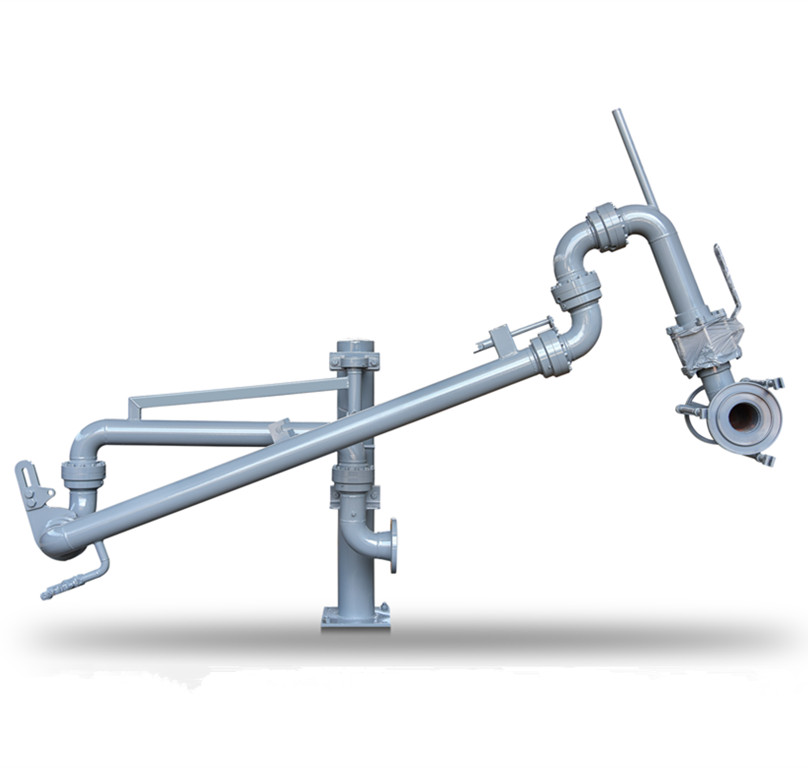
Loading arms are mechanical systems used to safely transfer liquids or gases between a fixed facility (like a terminal or storage tank) and a transport vehicle such as a ship, tanker truck, or rail car.
They are most commonly used in industries like the following:
- Oil and gas (crude oil, LNG, petroleum products)
- Chemical plants
- Fuel terminals and refineries
How they work
A loading arm is basically a rigid or articulated pipe system with swivel joints that allows controlled movement. It connects the storage system to the transport vessel and creates a sealed pathway for transferring fluids safely.
They usually include:
- Pipes/arms that move to align with the ship or tanker
- Swivel joints for flexibility
- Valves and couplings to control flow and prevent leaks
- Safety systems like emergency release couplers
Types of loading arms
- Marine loading arms: used to load/unload ships at ports
- Top loading arms: connect from above (often for tank trucks/railcars)
- Bottom loading arms: connect from the underside of vehicles, safer for flammable liquids
Why they are used
- Reduce spills and environmental risk
- Improve safety compared to hoses
- Handle high-pressure or hazardous materials
- Allow faster, more controlled transfer